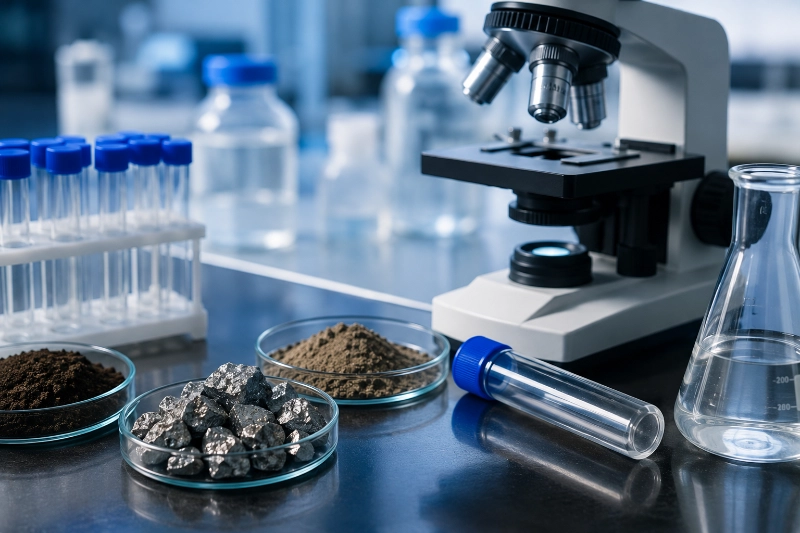
Environmental Metals Analysis
Metals testing is commonly required for water quality evaluations, site investigations, industrial monitoring, remediation projects, hazardous waste characterization, landfill disposal profiling, and regulatory compliance programs. MAI provides metals analysis using ICP-MS, ICP-OES, GFAA, CVAA, CVAFS, and hydride techniques to support projects requiring accurate, defensible data.
Our metals department supports routine and complex projects involving trace metals, heavy metals, mercury, CAM 17 metals, RCRA metals, TTLC, STLC, TCLP, drinking water compliance, wastewater monitoring, soil and sediment assessment, and specialty environmental matrices.
Common Metals Testing Services
- Drinking water metals testing
- Groundwater and surface water metals analysis
- Wastewater, stormwater, and effluent monitoring
- Soil, sludge, sediment, and solid waste metals testing
- Hazardous waste metals characterization
- CAM 17 and RCRA metals analysis
- TTLC, STLC, and TCLP metals support
- Low-level mercury analysis
- Trace metals and heavy metals testing
- Specialty metals and organometallic analysis
Common Matrices Tested
- Drinking water
- Groundwater
- Surface water
- Wastewater and effluent
- Stormwater runoff
- Soil and sediment
- Sludge and solids
- Hazardous waste
- Seawater and brines
- Petroleum liquids and specialty matrices
Common Analytical Methods & Parameters
-
Metals Instrumentation
- ICP-MS trace metals analysis
- ICP-OES routine metals analysis
- GFAA metals analysis
- CVAA and CVAFS mercury analysis
- Hydride metals analysis
-
Regulatory Metals Support
- EPA 200.7 / EPA 200.8 metals
- EPA 6010 / EPA 6020 metals
- EPA 7470 / EPA 7471 mercury
- CAM 17 metals
- RCRA 8 metals
- TTLC, STLC, and TCLP metals
-
Specialty Capabilities
- Organotin, organomercury, and organolead compounds
- Mono- through tetrabutyl tin speciation
- Tetramethyl lead and tetraethyl lead
- Methyl mercury and ethyl mercury analysis
- Ferrous iron by SM 3500-Fe B
Related Service: Many dredging and sediment characterization projects include metals analysis as part of sediment evaluation and disposal assessments. Learn more about our Dredge & Sediment Testing Services.
ICP-MS Metals Testing
ICP-MS (Inductively Coupled Plasma Mass Spectrometry) is used for low-level and trace metals analysis where sensitive reporting limits are needed. This technique is commonly used for drinking water, groundwater, surface water, effluent, and clean environmental matrices requiring strong sensitivity.
MAI’s ICP-MS capabilities support trace metals testing for clean water matrices as well as more difficult matrices such as seawater and brines. Hydride ICP-MS capability can provide ppt-level sensitivity for selected hydride-forming elements.
ICP-OES Metals Testing
ICP-OES (Inductively Coupled Plasma Optical Emission Spectroscopy) is commonly used for routine environmental metals analysis and higher concentration applications. ICP-OES is well suited for many wastewater, soil, sludge, solids, industrial materials, and waste characterization projects.
MAI can help evaluate which metals method is appropriate based on matrix, project requirements, reporting limits, expected concentration range, and regulatory objectives.
Mercury and Specialty Metals Analysis
MAI provides mercury analysis by cold vapor techniques, including CVAA and CVAFS, along with selected specialty metals and organometallic capabilities for environmental and industrial applications.
Specialty capabilities may include organotin, organomercury, organolead compounds, mono- through tetrabutyl tin, tetramethyl lead, tetraethyl lead, methyl mercury, ethyl mercury, and ferrous iron testing by SM 3500-Fe B.
Regulatory and Project Support
Metals testing is frequently required for drinking water projects, wastewater and stormwater monitoring, groundwater investigations, soil and sediment assessments, hazardous waste characterization, landfill disposal profiling, industrial compliance, and remediation programs.
MAI supports California and federal waste characterization needs including CAM 17 metals, RCRA metals, TTLC, STLC, and TCLP metals analysis. Electronic Data Deliverables (EDDs) are available for many project types and regulatory reporting requirements.
Commonly Requested Metals and Elements
Commonly requested elements include lead, arsenic, mercury, cadmium, chromium, nickel, copper, zinc, selenium, silver, barium, iron, manganese, sodium, CAM 17 metals, RCRA metals, and additional elements based on project requirements.
Related Environmental Testing Services
Metals testing is often performed alongside additional environmental laboratory services, including
hazardous waste testing,
environmental testing,
drinking water testing,
wet chemistry testing,
PFAS testing, and
Electronic Data Deliverables.
Frequently Asked Questions
Metals Target Compound & Analytical Method Reference
Download our Metals Target Compound and Analytical Method reference sheet
for additional details regarding commonly requested analytes, analytical
methods, matrices, and testing capabilities.
Download Metals Target List & Methods Reference (PDF)
Need Help Selecting a Metals Method?
If you are unsure which metals method, extraction, reporting limit, or sample preparation approach is appropriate, contact MAI before sampling. Our team can help review the project matrix, regulatory objective, expected concentration range, turnaround time, and EDD requirements.
For assistance with metals testing, call (877) 252-9262 or email
main@mccampbell.com.