PER- AND POLYFLUOROALKYL SUBSTANCES (PFAS) TESTING
Homeowners seeking PFAS testing of household drinking water can find additional information on our Drinking & Well Water Testing services page.
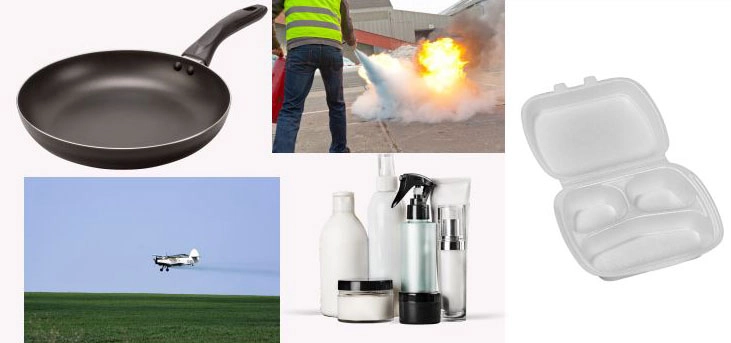
Per- and polyfluoroalkyl substances (PFAS) are a large group of manufactured chemicals that have been widely used since the 1940s in industrial processes and consumer products. Compounds such as PFOA and PFOS were among the most commonly produced and remain persistent in the environment. PFAS have been used to create stain-resistant fabrics and carpets, non-stick cookware, and firefighting foams, and are associated with industries including aerospace, automotive, construction, electronics, and military applications.
McCampbell Analytical supports PFAS testing requirements for regulatory compliance, site investigations, and ongoing monitoring projects. Our laboratory provides analytical support for programs such as UCMR5, state regulatory requirements, and consultant-led environmental investigations involving groundwater, surface water, soil, and wastewater matrices. We offer standard 5-day turnaround and optional 3-day rush reporting, with full accreditation under CA ELAP, DoD ELAP, and ISO 17025:2017.
McCampbell Analytical (MAI) has completed a full validation package with the use of ultra sensitive LC-MS-MS equipment to provide low reporting limits and maintain proper chemical resolution in over 40+ PFAS compounds for soil and groundwater and 18 compounds for drinking water.
PFAS Testing for Regulatory & Project Needs
McCampbell Analytical supports PFAS testing for regulatory compliance programs such as UCMR5 and state requirements, as well as site investigation and long-term monitoring projects. We help clients meet method-specific data needs and reporting expectations across multiple regulatory frameworks.
Why Choose McCampbell Analytical for PFAS Testing?
- Validated PFAS analytical methods using ultra-sensitive LC-MS/MS instrumentation
- Low reporting limits suitable for regulatory and project requirements
- 5 Day Standard Turnaround Time
- 3 Day Rush Turnaround Time Availability
- Capability to analyze over 40 PFAS compounds in soil and groundwater and 18 compounds in drinking water
- Experienced laboratory staff supporting consultant and regulatory projects
- CA ELAP Certified, DoD and ISO 17025:2017 Certified
- Fully Validated Method Including Proficiency Testing
PFAS Testing Available For:
- Drinking Water
- Groundwater
- Surface water
- Wastewater
- Soil
- Sediments
- Other environmental matrices as needed
Accreditations:
- Aqueous, Solid, and Tissue – EPA method 1633 under ISO 17024:2017
- Drinking Water – EPA method 533 under ISO 17025:2017
- Drinking Water - EPA Method 537.1 under ISO 17025:2017
- Drinking Water, Aqueous (non-potable), and Solid under CA ELAP
- Groundwater and Soil – DOD QSM 5.4 under ISO 17024:2017
PFAS analysis is increasingly requested as part of sediment characterization,
dredging projects, and dredged material evaluations. Learn more about our
Dredge & Sediment Testing Services,
including common analyses for sediment, elutriates, and disposal evaluations.
McCampbell Analytical (MAI) has completed a full validation package with the use of ultra sensitive LC-MS-MS equipment to provide low reporting limits and maintain proper chemical resolution in over 20+ PFAS compounds for soil and groundwater and 14 compounds for drinking water.