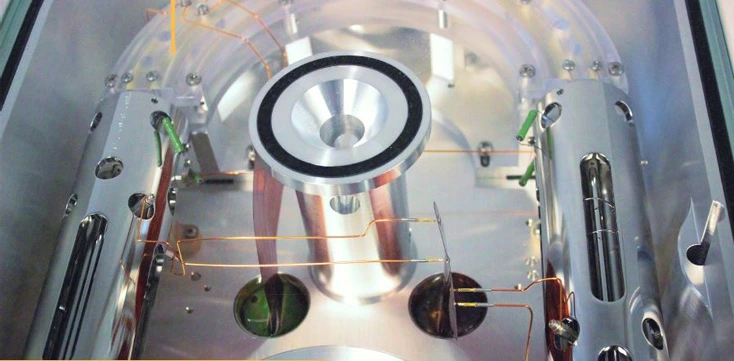
McCampbell Analytical, Inc. (MAI) provides advanced organic lead testing for environmental investigations involving historical leaded gasoline impacts, underground storage tank (UST) sites, former fuel facilities, and redevelopment projects. Our laboratory analyzes environmental samples for organic lead compounds including tetraethyl lead (TEL) and tetramethyl lead (TML) using sensitive GC-MS/MS instrumentation with enhanced selectivity and low-level detection capabilities.
Organic lead compounds may persist in soil and groundwater at former fueling locations and industrial sites, creating potential concerns during environmental assessment and remediation activities. MAI supports consultants, regulatory agencies, and remediation contractors throughout California with reliable analytical data for site characterization, monitoring, and compliance-driven investigations. Dedicated GC-MS/MS instrumentation allows for enhanced analytical capacity, sensitive low-level detection capabilities, and expedited turnaround times for time-sensitive projects.
MAI’s tetraethyl lead analytical capabilities achieve Arizona Department of Environmental Quality (ADEQ) soil LUST screening levels of 0.006 mg/kg, supporting low-level environmental investigations and remediation projects requiring highly sensitive detection limits.
| MAI OPb Reporting Limits |
|
Water (ug/L) PQL |
Soil (mg/kg) PQL |
| Tetramethyllead |
0.05 |
0.002 |
| Tetraethyllead |
0.05 |
0.002 |
Organic Lead and the Petro-Fuel Industry
In the 1920's, Tetraethyllead (TEL) was
introduced to the petro-fuel industry as an
automotive antiknock agent. It was selected
because it was both inexpensive and highly
efficient in increasing vehicle performance.
The pros of its efficacy were later outweighed
by the cons of its toxicity. Numerous cases
have been documented of deaths associated
with exposure to lead vapors. One notable
case took place in a New Jersey refinery
where 17 employees died from lead
poisoning.
Leaded gasoline was produced in the US for
decades until the US Clean Air Act declared it
banned for automotive use in 1996. In some
countries, the ban wasn't implemented until
years later.
Today we are still attempting to minimize the
health risks associated with the residual
effects of leaded gasoline. Screening of
organic lead compounds are required for sites
which have used or sold leaded gasoline in the
past before they are used for residential or
commercial occupancy.