• McCampbell Analytical, Inc.
  • Connected With Us
  • 1534 Willow Pass Road Pittsburg, CA 94565

Full-Service Environmental Laboratory with 35 Years of Proven Quality and Expertise

Accredited Testing. Fast Turnaround. Trusted Results

  • Certified & Accredited (NELAP ELAP DoD USDA AIHA-LAP)
  • Rapid Turnaround Times & Responsive Service
  • Experienced Support for Complex Projects

SPOTLIGHT:Holiday Closure:

McCampbell Analytical will be closed Friday, July 3, for the Independence Day holiday. We will resume normal business operations on Monday, July 6.

X-Ray Diffraction (XRD) Material Identification

Reliable XRD analysis for crystalline compound identification, mineral phase characterization, polymorph identification, and unknown material investigations.

X-Ray Diffraction (XRD) Analysis

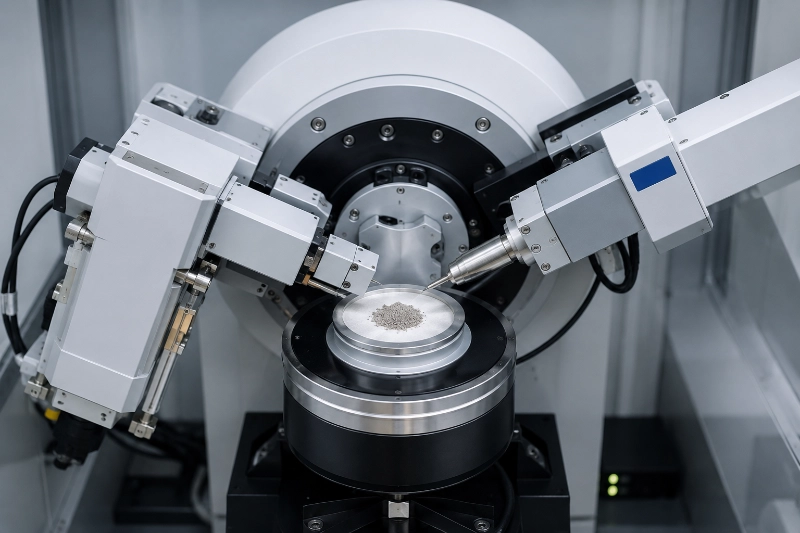
McCampbell Analytical, Inc. (MAI) provides X-Ray Diffraction (XRD) analysis for the identification and characterization of crystalline materials. XRD is commonly used to determine mineral phases, polymorphs, and crystalline compounds in solids, powders, manufacturing residues, corrosion products, deposits, and unknown materials.

Unlike elemental testing methods such as XRF, ICP, or SEM-EDS, XRD helps identify the actual crystalline compounds present in a sample. This makes it especially useful when a project needs to determine whether a material contains specific crystalline phases such as quartz, cristobalite, calcite, aragonite, alumina, hematite, magnetite, or other mineral forms.

What XRD Can Determine

  • Crystalline compound identification
  • Mineral phase identification
  • Polymorph identification, such as quartz versus cristobalite
  • Quantitative phase analysis, when applicable
  • Crystalline versus amorphous content
  • Characterization of unknown powders, solids, residues, and deposits

Common XRD Applications

XRD can support a wide range of material science, industrial, environmental, and research-related investigations. Typical applications include:

  • Unknown material identification
  • Mineral and crystalline phase characterization
  • Manufacturing residue or process deposit evaluation
  • Corrosion product identification
  • Powder and solid material analysis
  • Crystalline silica phase identification
  • Research and development support
  • Quality assurance and troubleshooting investigations

Who We Support

MAI works with environmental professionals, manufacturers, engineers, researchers, universities, and industrial clients who need reliable analytical support for crystalline material identification and unknown solid characterization.

  • Environmental consultants
  • Industrial hygiene consultants
  • Manufacturers and process facilities
  • Universities and research laboratories
  • Engineering and materials science teams
  • Mining, aggregate, and cement-related industries
  • Failure analysis and product investigation teams

XRD vs. Other Analytical Techniques

XRD is used when identifying the specific crystalline structure of a material is important. Elemental methods may show which elements are present, but XRD can help determine how those elements are arranged as compounds or mineral phases.

For example, calcium and carbon may be detected by elemental methods, but XRD can help determine whether the crystalline phase is calcite, aragonite, or another mineral form. This distinction can be important for material investigations, industrial troubleshooting, and environmental evaluations.

Sample Submission Guidelines

For best results, submit a representative sample in a clean, dry container. If the material has visible layers, coatings, or separate components, please identify whether the sample should be analyzed as a whole or separated before analysis.

  • Dry solid or powder samples are preferred
  • Minimum sample size may vary depending on the material and project objective
  • Very small samples may be possible depending on the analysis needed
  • Provide background information about the sample source, project goal, and suspected material, if known
  • Contact MAI before submitting unusual, limited, or high-priority samples

Related Services

Need organic, polymer, coating, or residue identification? Visit our ATR-IR Spectroscopy Services page.

Need workplace exposure monitoring for silica dust? Visit our Respirable Crystalline Silica Testing page.

Need Help with XRD Testing?

Contact McCampbell Analytical to discuss your material, sample type, project goals, and turnaround needs. Our team can help determine whether XRD is appropriate for your investigation or if another analytical approach may be better suited.

For assistance with XRD material identification, call (877) 252-9262 or email main@mccampbell.com.

FAQs

What is XRD used for?

XRD is used to identify crystalline compounds, mineral phases, polymorphs, and unknown solid materials. It is especially useful when the actual crystalline structure of a material needs to be determined.

How is XRD different from elemental testing?

Elemental methods identify which elements are present, while XRD identifies the crystalline compounds or mineral phases those elements form. This can provide more specific information about the material.

Can XRD identify quartz and cristobalite?

Yes. XRD can help identify and differentiate crystalline silica phases such as quartz, cristobalite, and tridymite, depending on the sample and project requirements.

What sample types can be submitted for XRD?

Common sample types include powders, solids, deposits, corrosion products, manufacturing residues, minerals, and unknown materials. Contact MAI before submitting unusual or very limited samples.

Do you help determine whether XRD is the right test?

Yes. Our team can review your sample type, project goal, and suspected material to help determine whether XRD, ATR-IR, or another analytical technique is most appropriate.